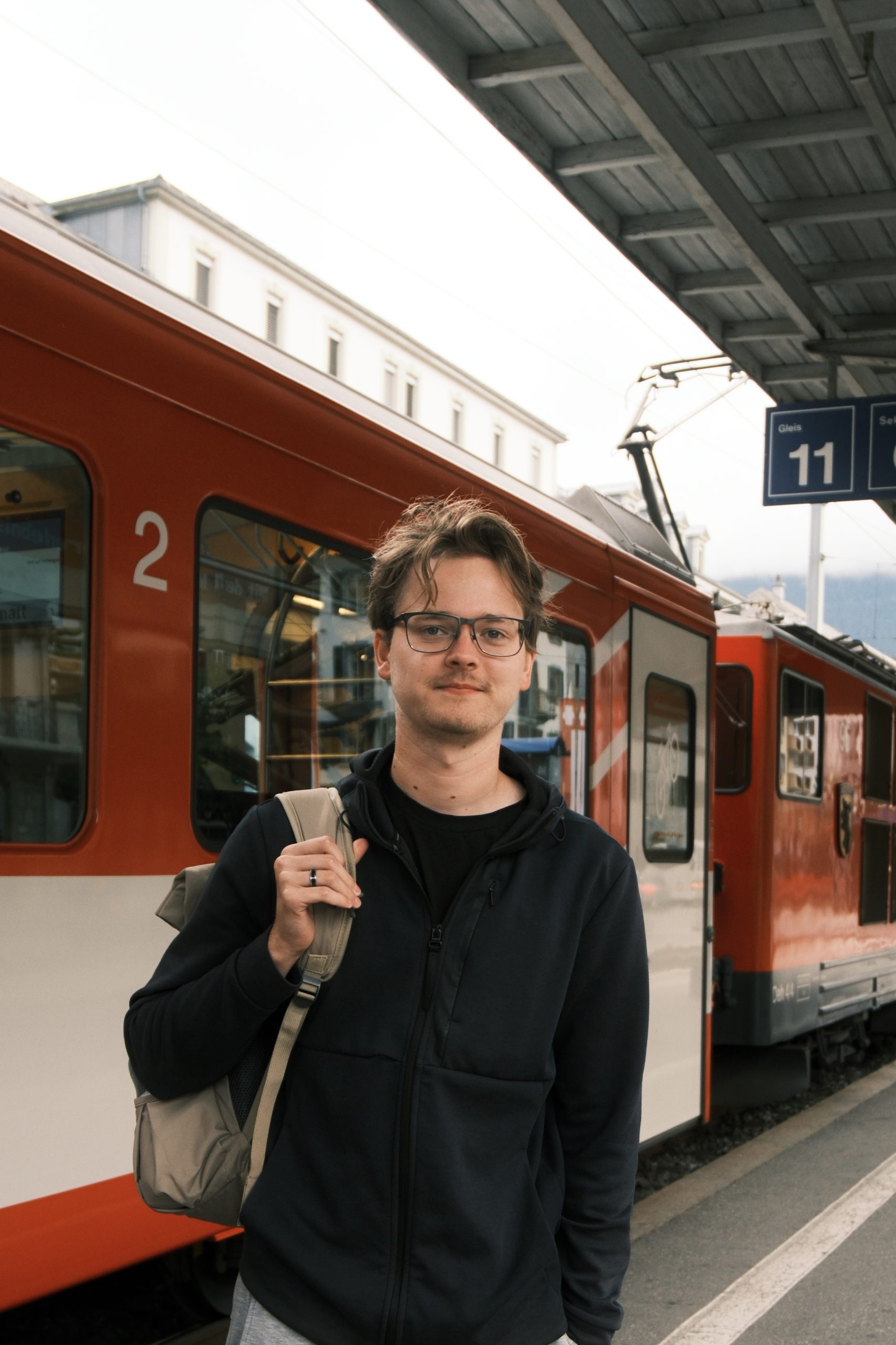

If you are travelling Switzerland without a car, choosing the right rail pass can make a big difference. But I would not automatically buy the Swiss Travel Pass just because you are visiting Switzerland. The better choice depends heavily on where you are actually spending your time. If you are travelling across several parts of […]
In this guide
If you are travelling Switzerland without a car, choosing the right rail pass can make a big difference.
But I would not automatically buy the Swiss Travel Pass just because you are visiting Switzerland.
The better choice depends heavily on where you are actually spending your time.
If you are travelling across several parts of Switzerland — for example Zurich, Lucerne, Interlaken and Lausanne — the nationwide Swiss Travel Pass is easy to understand and can be very convenient.
If most of your trip is based around Interlaken and the Berner Oberland, I would look very closely at the Berner Oberland Pass instead.
That regional pass covers a surprisingly large network around Interlaken and includes or discounts many of the mountain journeys that are probably the reason you came to the region in the first place.
I normally travel to Switzerland using an Interrail Pass, because Switzerland is often part of a wider European train journey for me. So I am not going to pretend that I personally use one of these two passes on every trip.
Instead, this comparison is based on how I would choose between them for a car-free Switzerland itinerary, combined with the current 2026 coverage and prices of both passes.
Quick answer: which pass should you choose?
| Your trip | I would look at |
|---|---|
| Zurich + Lucerne + Interlaken + Lausanne | Swiss Travel Pass |
| Several regions across Switzerland | Swiss Travel Pass |
| Flying into Switzerland and moving around frequently | Swiss Travel Pass |
| Mostly based in Interlaken | Berner Oberland Pass |
| Lauterbrunnen + Grindelwald + Mürren | Berner Oberland Pass |
| Lots of mountain excursions in the Berner Oberland | Berner Oberland Pass |
| Jungfrau-region hiking trip | Berner Oberland Pass |
| Wider European rail trip | Interrail may make more sense |
| Mostly one city with a few trips | Compare individual tickets before buying either |
My simple rule would be:
Swiss Travel Pass = nationwide mobility.
Berner Oberland Pass = deeper regional travel around Interlaken and the mountains.
The main difference
The Swiss Travel Pass is a national public-transport pass for international visitors.
It gives unlimited travel on covered trains, buses and boats across Switzerland during its validity period, includes local transport in more than 90 towns and cities, gives access to more than 500 museums and includes or discounts selected mountain excursions.
The Berner Oberland Pass is much more regional.
It focuses on the Bernese Oberland and connects places such as Interlaken, Lauterbrunnen, Grindelwald, Mürren, Kandersteg, Thun, Bern and many mountain transport systems.
That means the Swiss Travel Pass covers more of Switzerland, while the Berner Oberland Pass can cover more of the expensive regional transport you are likely to use around Interlaken.
That distinction is more useful than simply comparing the headline prices.

2026 prices
For an adult travelling in second class, the 2026 Swiss Travel Pass costs:
| Duration | Swiss Travel Pass |
| 3 days | CHF 254 |
| 4 days | CHF 309 |
| 6 days | CHF 399 |
| 8 days | CHF 439 |
| 15 days | CHF 499 |
The days are consecutive.
The 2026 full-price second-class Berner Oberland Pass costs:
| Duration | Berner Oberland Pass |
| 3 days | CHF 240 |
| 4 days | CHF 280 |
| 6 days | CHF 350 |
| 8 days | CHF 395 |
| 10 days | CHF 435 |
The Berner Oberland Pass also uses consecutive travel days.
At first glance the prices are relatively close.
But that is not enough to decide which is better.
You need to look at what you are actually going to ride.
When the Swiss Travel Pass makes more sense
I would start with the Swiss Travel Pass if your itinerary moves around Switzerland rather than staying in one region.
Imagine a trip like:
Zurich → Lucerne → Interlaken → Lausanne → Montreux
That is exactly the kind of itinerary where a nationwide pass becomes attractive.
You are using:
- intercity trains;
- regional trains;
- buses;
- local city transport;
- potentially boats;
- several completely different regions.
The convenience is significant.
You do not have to repeatedly calculate whether a normal train journey is covered because the pass is built around broad national public-transport access.
This is also why I would consider it particularly strongly if I were flying into Switzerland rather than arriving with an Interrail Pass.
You can land, start using public transport and continue travelling through the country with one main ticket.
Travelling Switzerland without a car: If this is your first car-free trip, my Switzerland by train with luggage explains what travelling around the country with bags and train transfers is actually like.
When the Berner Oberland Pass makes more sense
Now imagine a completely different trip.
You fly into Switzerland, travel to Interlaken and then spend six days doing things like:
- Lauterbrunnen;
- Mürren;
- Grindelwald;
- Wengen;
- Schilthorn;
- mountain hikes;
- lake trips;
- Kandersteg;
- regional train and bus journeys.
That is where I would stop assuming the nationwide pass is automatically best.
The Berner Oberland Pass is designed specifically around this region.
For example, travel to Lauterbrunnen, Grindelwald and Wengen is included within its validity area.
The route from Lauterbrunnen via Grütschalp and Winteregg to Mürren is fully included.
The official 2026 pass information also lists major regional attractions and transport such as the Schilthorn, Stockhorn, Niederhorn, parts of the GoldenPass network, Männlichen and the Luzern–Interlaken Express among included or discounted transport options.
If those are the journeys filling most of your itinerary, a regional pass deserves serious consideration.


Why this matters for an Interlaken-based trip
Interlaken is unusual because getting to the town itself is only the beginning.
A lot of the expensive and interesting transport comes after you arrive.
You may travel from Interlaken to Lauterbrunnen in the morning, continue towards Mürren, use a cable car, return through the valley and then make another trip the following day towards Grindelwald.
That is very different from a city break where you take one intercity train and then walk around for two days.
This is one of the main reasons I would compare a regional pass for an Interlaken-heavy itinerary.
If you are still deciding where to stay, see my Interlaken vs Lauterbrunnen comparison and where to stay in Interlaken, Lauterbrunnen or Grindelwald.
Swiss Travel Pass vs Berner Oberland Pass for Lauterbrunnen
If Lauterbrunnen is only one stop during a wider Swiss itinerary, the Swiss Travel Pass can make more sense because you are paying for nationwide travel.
But if Lauterbrunnen is part of several days exploring the Jungfrau region, the Berner Oberland Pass becomes more interesting.
The regional pass covers travel to Lauterbrunnen and also includes the connection via Grütschalp to Mürren.
That means you are not just comparing the price of:
Interlaken → Lauterbrunnen
You need to compare the entire set of regional journeys you plan to make.
My Interlaken to Lauterbrunnen train guide explains how the normal journey works.
Swiss Travel Pass vs Berner Oberland Pass for Grindelwald
The same logic applies to Grindelwald.
Travel to Grindelwald is included within the Berner Oberland Pass network.
From there, however, some mountain journeys may still be discounted rather than completely included.
For example, the Berner Oberland Pass gives a 50% discount on the Grindelwald–First gondola, while the First activities themselves are not additionally discounted.
That is exactly why I would never choose a pass based only on the phrase “mountain transport included.”
You have to check the exact cable cars and mountain railways you plan to use.
For the normal arrival route, see my Interlaken to Grindelwald train guide.
What about Mürren and Schilthorn?
This is one of the stronger arguments for the Berner Oberland Pass.
The route from Lauterbrunnen via Grütschalp and Winteregg to Mürren is included.
The Berner Oberland Pass FAQ also states that travel from Lauterbrunnen via Stechelberg or Grütschalp/Mürren all the way to Schilthorn is included.
If Mürren and Schilthorn are major parts of your itinerary, this can materially change the value of the pass.
You can see how I normally travel there in my Interlaken to Mürren guide.

What about Jungfraujoch?
Do not assume either pass means Jungfraujoch is completely free.
With the Berner Oberland Pass, travel to Grindelwald or Wengen is included, but the journey further towards Jungfraujoch is discounted rather than fully covered.
For 2026, the Berner Oberland Pass gives a 25% discount on the relevant sections towards Kleine Scheidegg, Eigergletscher and Jungfraujoch.
There is another important 2026 rule: the official Berner Oberland Pass information states that a Jungfraujoch seat reservation is required from 1 May through 31 August, and recommended outside that period.
So Jungfraujoch is one excursion where I would calculate the complete price separately before choosing a pass.
Seat reservations: Most Swiss trains do not need a reservation, but some tourist services work differently. My Swiss train seat reservation guide explains when you actually need one.
A major 2026 change for Oeschinensee
This is particularly relevant for my site because I write a lot about Oeschinensee and Kandersteg.
From 2026, the Kandersteg–Oeschinensee cable car is no longer included in the Berner Oberland Pass.
The local bus from Kandersteg station to the Oeschinen valley station is still listed as free with the pass, but the actual cable-car line to Oeschinensee was removed from the pass’s included network for 2026.
That means I would not buy a Berner Oberland Pass purely because you are planning an Oeschinensee day.
You need to look at the rest of your itinerary.
If you are combining Oeschinensee with Lauterbrunnen, Mürren, Schilthorn, Grindelwald, lake trips and other regional excursions, the pass may still make sense.
But Oeschinensee itself is no longer the inclusion it once was.
See my Oeschinensee day trip from Interlaken for the actual route.
What about the Luzern–Interlaken Express?
This is an interesting overlap.
The Berner Oberland Pass covers the Luzern–Interlaken Express within its applicable network, although the official pass guidance strongly recommends a separate seat reservation.
The Swiss Travel Pass also covers premium panoramic train travel, though reservations or supplements can still be required depending on the service.
So this is not necessarily the journey that should decide between the two passes.
The more important question is what you do before and after that train.
What about Montreux?
The Berner Oberland Pass is more geographically useful than its name might initially suggest.
Its official material lists travel towards Montreux via Zweisimmen among journeys within the pass network.
That could make it particularly interesting if you want to travel from the Interlaken region westwards via the scenic GoldenPass route.
However, if Montreux is only one part of a longer journey through Lausanne, Geneva, Zurich and other parts of Switzerland, the nationwide Swiss Travel Pass becomes easier to justify.
This is where itinerary design matters more than individual attractions.
What if you fly into Zurich?
If I flew into Zurich and planned:
Zurich → Interlaken → Lauterbrunnen/Grindelwald → Zurich
I would calculate both options.
The Swiss Travel Pass gives you nationwide travel from the start.
The Berner Oberland Pass focuses its value on the days you are actually in the regional network.
So it can be perfectly reasonable to buy normal tickets for the airport journey and use the regional pass once your Berner Oberland section begins.
You do not necessarily need one pass to cover every metre of the holiday.
That is an important mindset when comparing Swiss rail passes.
What if you fly into Geneva?
The same applies from Geneva.
If you are moving around Lake Geneva, visiting Lausanne and Montreux and then continuing towards Interlaken, the Swiss Travel Pass becomes more attractive because you are already making substantial national journeys.
If you simply travel from Geneva to an Interlaken base and spend most of the holiday there, I would still calculate whether a regional solution plus normal arrival/departure tickets is cheaper.
There is no rule that says your airport transfer must be included in whichever pass you use for the rest of the trip.
Where Interrail fits in
This is actually what I normally use.
I often travel to Switzerland as part of a wider European train journey, so an Interrail Pass makes more sense for my own travel style.
It covers the international journey as well as many of the normal train journeys I make in Switzerland.
But regional mountain transport is a different issue.
An Interrail Pass does not suddenly make every mountain cable car or tourist railway free.
So even as an Interrail traveller, I still look at what individual mountain journeys cost.
If your entire holiday is in Switzerland, buying an Interrail Pass solely to reproduce what a Swiss-specific pass already does would usually require a separate comparison.
But if your trip is:
Netherlands → Germany → Switzerland → Italy
then you are solving a completely different travel problem.
Convenience vs the cheapest possible price
I would not judge these passes only by whether one saves CHF 20.
Convenience matters.
With a pass that covers the journey, you can often simply check the timetable and travel.
That becomes particularly valuable on days where you are unsure what you want to do.
Maybe the mountains are covered in cloud, so you abandon one hike and go to Thun instead.
A broad pass can make that decision much easier.
For me, that flexibility has real value.
At the same time, I would not pay hundreds of francs for theoretical flexibility I am unlikely to use.
If your itinerary is already very fixed, calculate the journeys you are actually planning.
Example 1: nationwide Switzerland trip
Imagine:
Day 1: Zurich
Day 2: Zurich → Lucerne
Day 3: Lucerne → Interlaken
Day 4: Lauterbrunnen
Day 5: Grindelwald
Day 6: Interlaken → Lausanne
Day 7: Montreux / Chillon
Day 8: continue towards Geneva or Zurich
For this type of trip, I would start by pricing the Swiss Travel Pass.
You are making national journeys across several transport regions.
The Berner Oberland Pass may be excellent for days 3–5, but its regional advantages become less useful for the rest of the trip.
Example 2: Interlaken as your main base
Now imagine:
Day 1: arrive in Interlaken
Day 2: Lauterbrunnen + Mürren
Day 3: Grindelwald
Day 4: mountain hike
Day 5: Schilthorn
Day 6: Thun or lake trip
Day 7: Kandersteg
Day 8: leave
This is exactly where I would investigate the Berner Oberland Pass first.
The regional journeys are no longer small side trips.
They are your holiday.
My Interlaken travel guide can help if you are still building an itinerary around this region.
Example 3: Interlaken plus Lausanne
This one is less obvious.
Suppose you spend:
- four or five days around Interlaken;
- then three days around Lausanne and Montreux.
I would calculate both approaches.
A Berner Oberland Pass can be very valuable during the first half, while regular tickets could cover the Lake Geneva portion.
Alternatively, a Swiss Travel Pass might provide enough nationwide convenience to justify using a single product.
There is no universal winner here.
The details of your mountain excursions will probably decide it.
For the Lake Geneva side of the trip, see my Lausanne vs Montreux comparison.
Should you combine passes?
Possibly, but I would not start there.
It is easy to make Swiss transport planning unnecessarily complicated by stacking:
- Swiss Travel Pass;
- Swiss Half Fare Card;
- Berner Oberland Pass;
- Jungfrau Travel Pass;
- individual tickets;
- local guest cards.
Start with your itinerary.
Then calculate which one main product covers the largest share of your expensive travel.
Only add another pass if there is a clear financial reason.
The Berner Oberland Pass does offer reduced pricing to holders of products including the Swiss Half Fare Card, but that becomes a separate calculation.
Do you still need seat reservations?
Usually not for normal Swiss trains.
Buying either pass does not change the basic reservation system.
Normal domestic services generally do not require you to reserve a specific seat.
Some panoramic and tourist services are different.
The Swiss Travel Pass specifically notes that services such as the Glacier Express and Bernina Express can require a reservation or supplement.
The Berner Oberland Pass likewise has separate reservation rules for services including the Luzern–Interlaken Express and Jungfraujoch.
See my guide to Swiss train seat reservations if this is your first trip.
My recommendation
I would choose based on the geographic centre of your trip.
If your itinerary is genuinely a tour of Switzerland, start with the Swiss Travel Pass.
If you are effectively taking a holiday in the Berner Oberland with Interlaken as your transport hub, start with the Berner Oberland Pass.
And if Switzerland is part of a larger European rail journey, look at Interrail before automatically buying another national pass.
The important thing is not to ask:
Which Swiss rail pass is best?
Ask:
Which pass covers the expensive journeys I am actually going to take?
That question usually makes the decision much easier.
Using Interlaken as a base: If most of your trip will be in the Berner Oberland, deciding where to stay matters just as much as choosing a rail pass. See my guide to Interlaken as a base for the Jungfrau region.
Frequently asked questions
Is the Swiss Travel Pass or Berner Oberland Pass better?+
Is the Berner Oberland Pass worth it if I stay in Interlaken?+
Does the Berner Oberland Pass include Lauterbrunnen?+
Does the Berner Oberland Pass include Mürren?+
Does the Berner Oberland Pass include Schilthorn?+
Does the Berner Oberland Pass include Jungfraujoch?+
Does the Berner Oberland Pass include Oeschinensee?+
Is the Swiss Travel Pass good if I fly into Switzerland?+
Can I use Interrail instead?+
About the author

Discussion
Join the conversation
No comments yet. The posting flow is being moved into the frontend as well.