
Fujifilm recipe
Old Black & White Fujifilm Recipe for Rainy & Moody Days
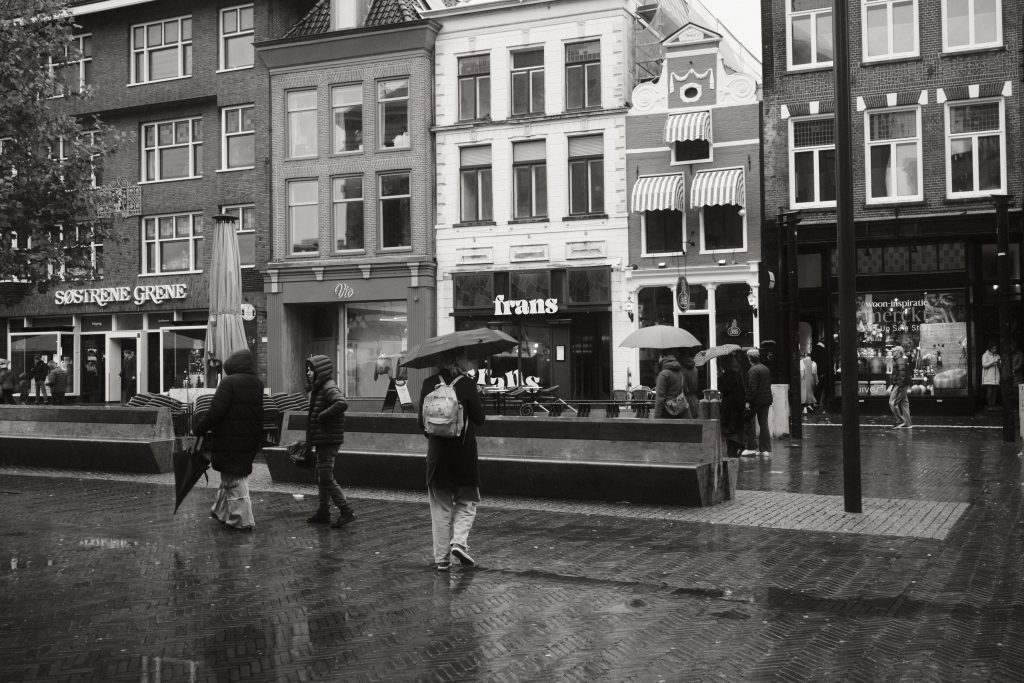
Old Black & White Fujifilm Recipe Old Black & White is the Fujifilm recipe I use when colour stops being the most interesting part of the scene. I especially like it during bad weather: rain, heavy cloud, darker streets or moments that simply feel more cinematic in black and white. The recipe has a contrasty […]

Old Black & White Fujifilm Recipe
Old Black & White is the Fujifilm recipe I use when colour stops being the most interesting part of the scene.
I especially like it during bad weather: rain, heavy cloud, darker streets or moments that simply feel more cinematic in black and white.
The recipe has a contrasty monochrome look that works particularly well with people, architecture, wet streets and quiet everyday scenes. Instead of trying to make poor weather look warmer or more colourful, I often prefer to lean into the atmosphere that is already there.
That is what Old Black & White is for.



When I use Old Black & White
I don’t switch to black and white every time the sun disappears.
It depends much more on the scene.
If the colours still add something important to the photograph, I will usually stay with a colour recipe such as Cinematic Gold.
But when the weather becomes grey, rainy or darker — or when the photograph is mainly about light, shapes, people and atmosphere — Old Black & White often makes more sense.
I particularly like using it for:
- rainy streets
- heavily overcast days
- street photography
- people in poor weather
- architecture
- quiet city scenes
- wet surfaces and reflections
- darker forests
- documentary-style photography
- scenes that already feel cinematic
Why bad weather works so well in black and white
Grey weather can sometimes make colour photography feel flat.
The sky may have very little colour, buildings can become muted and the entire scene can start blending together.
Black and white changes what I pay attention to.
Instead of colour, I start looking at contrast, light, silhouettes, reflections, clothing, architecture and the position of people inside the frame.
Rain can make that even more interesting.
Wet streets reflect light. Dark surfaces become deeper. Umbrellas, coats and passing people create shapes that may be much more important than the actual colours in the scene.
Rather than trying to fix bad weather, I use it.
Cloudy-day recipes: I don’t always shoot black and white when the sky turns grey. See my Fujifilm recipes for cloudy weather to compare when I use monochrome and when I stay with colour.
Old Black & White for street photography
Street photography is one of the most natural uses for this recipe.
Colour can be useful in street photography, but it can also become distracting.
Signs, cars, clothing, advertisements and shop windows can all compete for attention.
With Old Black & White, I can focus more on the person or moment that made me take the photograph in the first place.
It works particularly well when the light is already dramatic: someone walking through rain, a person under an umbrella, reflections on the pavement or strong architectural lines around a subject.
I also like the slightly older feeling black and white can give ordinary contemporary scenes.
The photograph does not need to contain anything spectacular.
Sometimes a quiet street and one person are enough.
Using it with people
I often photograph people as part of a wider scene rather than making formal portraits.
Black and white is useful here because clothing and background colours become less important.
A bright jacket or colourful sign no longer dominates the photograph simply because of its colour.
Instead, the viewer is drawn more towards the person, expression, light and composition.
That makes Old Black & White particularly useful for documentary-style travel and street photography.
Architecture and quiet city scenes
Architecture is another situation where I like using the recipe.
Buildings naturally contain lines, textures, repeating patterns and areas of light and shadow.
Those elements become much more obvious once colour disappears.
Older streets and buildings can also suit the monochrome look particularly well, especially on darker days when a warm colour recipe would feel forced.
I often prefer Old Black & White when the mood of a city is more interesting than its colours.
Rain and wet streets
Rain is probably one of my favourite reasons to switch to this recipe.
A wet street behaves very differently from a dry one.
Street lights, windows and brighter areas start reflecting from the ground. Pavements become darker and people react to the weather.
That creates more contrast and more visual structure.
It is exactly the kind of situation where black and white can turn what initially looks like poor photography weather into something much more interesting.
Cloudy weather does not automatically mean black and white
This is an important distinction.
A cloudy day can still have useful colour.
If I’m photographing a landscape, wooden buildings, people or scenes with subtle natural colour, I may still prefer a colour recipe.
For natural outdoor scenes in cloudy or mixed light, Mountain Reality can be a better fit.
If I want some warmth and atmosphere despite softer light, Cinematic Gold may still work.
Old Black & White becomes my choice when the atmosphere is stronger than the colour.
That is the simplest way I decide.
Old Black & White in autumn and winter
I particularly like having this recipe available during autumn and winter.
Those seasons naturally give me more cloudy, rainy and darker conditions.
During autumn, I normally use Cinematic Gold when the brown and golden colours are part of the photograph. But once the scene becomes grey or more cinematic, I may switch to Old Black & White.
I explain that choice in my best Fujifilm recipes for autumn photography.
Winter works in a similar way.
I often use Cinematic Gold for colour photography during winter, but black and white gives me another option when the weather becomes darker or colour contributes very little to the scene.
When I would not use Old Black & White
I would not use the recipe simply because the weather is bad.
If colour is an important part of the photograph, removing it can make the image weaker.
Autumn foliage is an obvious example.
The same applies to colourful markets, dramatic blue skies, warm evening light or scenes where the contrast between warm and cool colours is what attracted me.
I also would not choose this recipe when accurate colour is important — although in that situation I probably would not be choosing a stylised film recipe in the first place.
Old Black & White is for scenes where monochrome adds something.
Not just scenes where colour is difficult.
My approach to black and white Fujifilm recipes
I don’t think black and white has to be complicated.
I want a recipe I can recognise quickly and use when a scene feels right for it.
Old Black & White fills that role for me.
When I see rain, reflections, darker streets or a scene where shapes and people matter more than colour, I already know what kind of result I am looking for.
That makes the recipe useful as part of a small group of looks I actually know rather than one of dozens of presets I rarely use.
More Fujifilm recipes: See the Fujifilm recipes I use for travel to compare my black and white look with some of the colour recipes I use for cities, mountains and landscapes.