In this guide
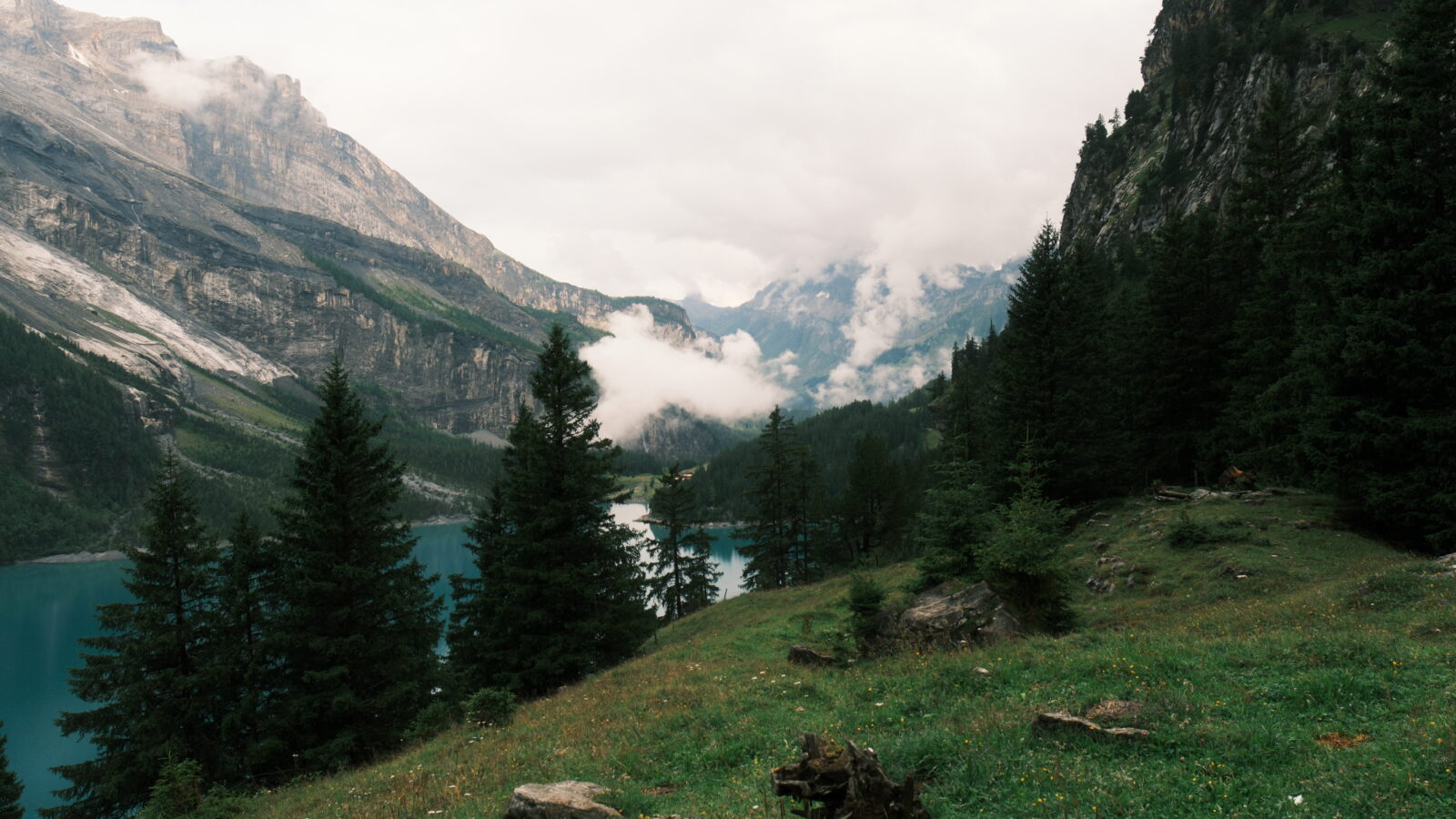
When I arrived at Oeschinensee, the lake was still hidden.
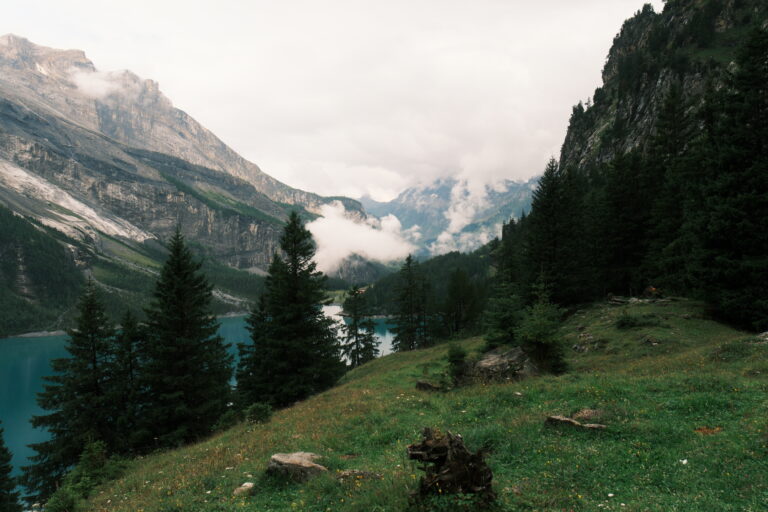
The cable car had already carried me high above Kandersteg, but from the mountain station I still had to walk for around 30 minutes. Then, almost without warning, the mountains opened and the blue water appeared beneath the cliffs.
That moment is what makes Oeschinensee worth the longer journey from Interlaken.
More Interlaken ideas: Looking for more ideas? Check out my guide to the best day trips from Interlaken without a car.
It is not the closest or easiest day trip from Interlaken. You need to travel by train via Spiez, continue to Kandersteg, reach the cable car and then walk to the lake. But the route is straightforward, even without a car, and the scenery feels noticeably different from the classic Jungfrau Region.
This guide explains the complete journey, how much time you need, whether you must reserve the cable car and how to choose between a relaxed lake visit and the Panorama Trail.
Oeschinensee day trip: quick overview
| Question | Quick answer |
|---|---|
| Is Oeschinensee worth visiting from Interlaken? | Yes, especially if you have already seen the main Jungfrau Region attractions |
| Is it possible without a car? | Yes; the complete route works well by public transport |
| What is the nearest train station? | Kandersteg |
| How long is the train journey? | Usually around 1 hour to 1 hour 15 minutes each way |
| How do you reach the lake? | Train, walk or bus, cable car and a final walk |
| Does the cable car stop beside the lake? | No; the lake is approximately a 30-minute walk away |
| How much time should you allow? | At least 7–8 hours from Interlaken |
| Is half a day enough? | Technically possible, but a full day is much better |
| Can you visit without hiking? | Yes, although some walking is still required |
| Should you reserve the cable car? | For the 2026 high season, an ascent reservation is required from June 20 to September 20 |
| Best option for hikers | Oeschinensee Panorama Trail |
| Best option for a relaxed visit | Cable car followed by the direct path to the lake |
Is Oeschinensee worth visiting from Interlaken?
Yes—if you have enough time.
The lake sits above Kandersteg, enclosed by steep cliffs and high mountain peaks. It feels larger and more dramatic than many of the lakes closer to Interlaken. The landscape is less gentle than Bachalpsee and more imposing.
The trade-off is travel time. Oeschinensee is not a quick excursion that you can easily fit around several other attractions. It deserves most of a day.
If you have only one or two days in Interlaken, I would probably prioritise Lauterbrunnen, Grindelwald or Bachalpsee. My Interlaken versus Lauterbrunnen comparison can help if you are still deciding how to divide your time.
If you have three or more days, have already explored the Jungfrau Region or simply want the more dramatic lake, Oeschinensee is one of the best day trips you can add.
How to get from Interlaken to Oeschinensee
The complete route looks more complicated on paper than it feels in practice:
- Take the train from Interlaken to Spiez.
- Change in Spiez for the train to Kandersteg.
- Walk or take the local bus to the cable-car valley station.
- Take the cable car towards Oeschinensee.
- Walk from the mountain station to the lake.
You are therefore travelling to Kandersteg first—not directly to Oeschinensee.
| Section | Transport | Approximate time |
|---|---|---|
| Interlaken to Spiez | Train | 15–25 minutes |
| Spiez to Kandersteg | Train | 30–45 minutes |
| Kandersteg station to cable car | Walk or seasonal bus | 10–15 minutes on foot |
| Cable-car journey | Gondola | Several minutes |
| Mountain station to Oeschinensee | Walk | Around 30 minutes |
Connections and waiting times vary, so check the complete route in SBB shortly before travelling. My separate guide explains how to get to Oeschinensee by train from Interlaken and other Swiss cities in more detail.
Interlaken to Spiez
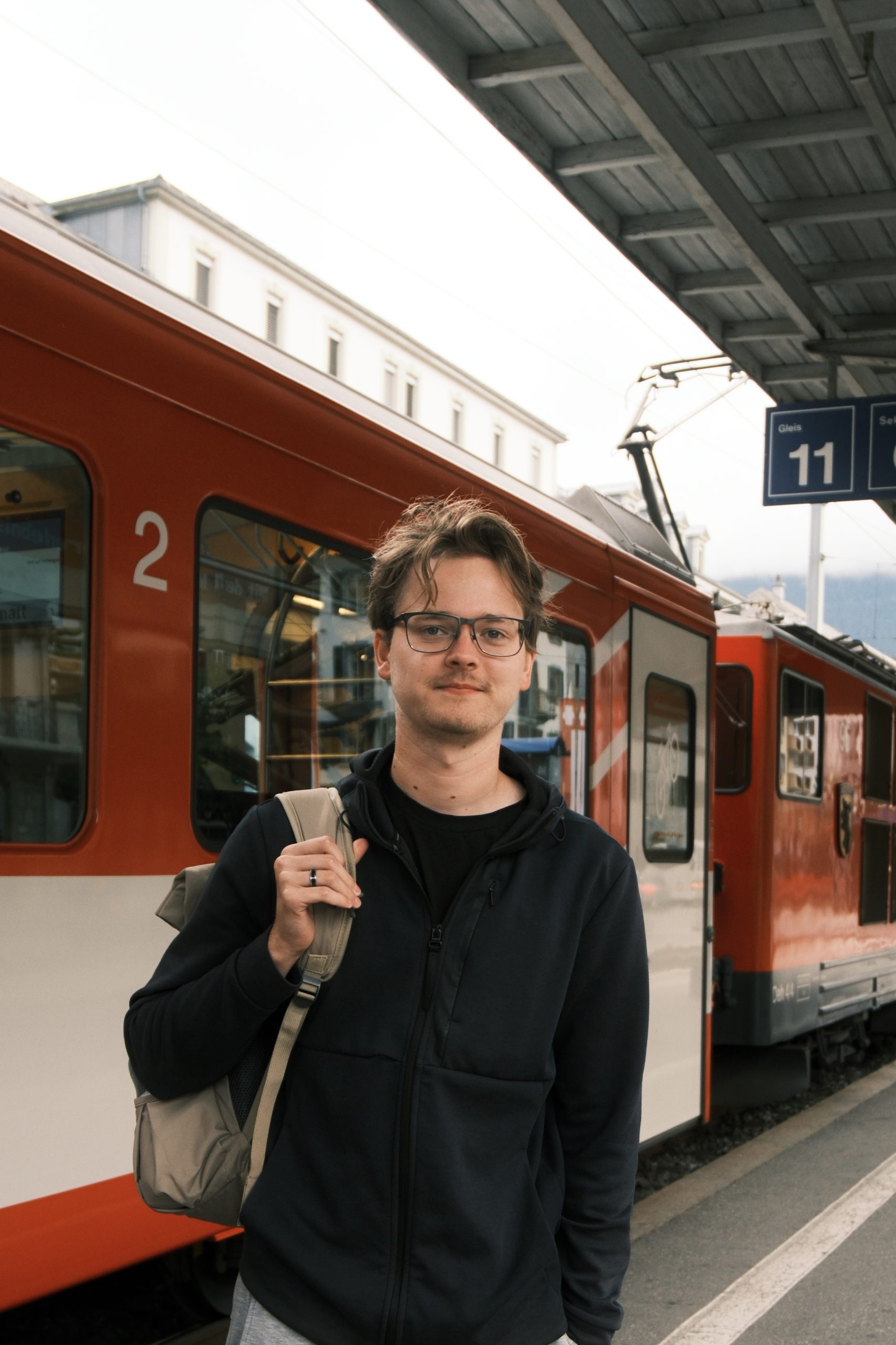
You can begin at Interlaken Ost or Interlaken West, depending on your accommodation and the connection.
The first train follows Lake Thun towards Spiez. This is your transfer point for Kandersteg, and the change is generally straightforward.
You do not need to book a separate train for each section. Search for the complete journey from your Interlaken station to Kandersteg in the SBB app, which will show the correct platform and connection.
Spiez to Kandersteg
From Spiez, take the train towards Kandersteg.
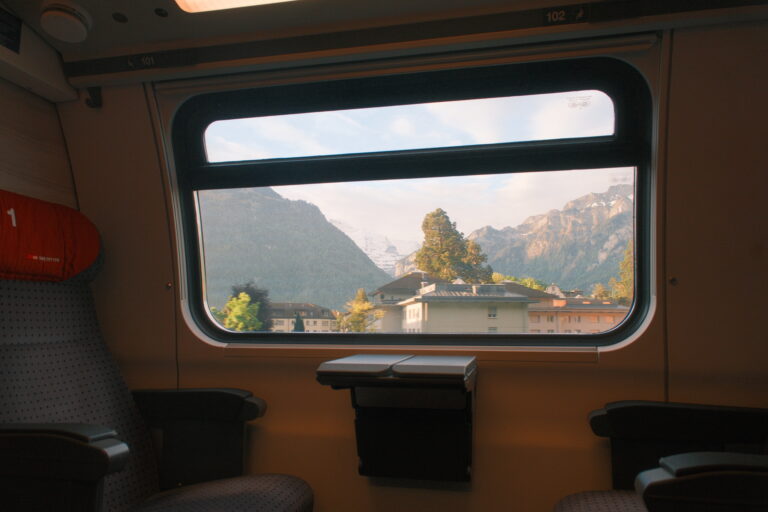
This is where the journey begins to feel different from a typical Interlaken day trip. The train leaves the familiar Jungfrau corridor and continues into the Kander Valley, with the surrounding mountains gradually closing in.
Kandersteg is the station you need for Oeschinensee.
Kandersteg station to the cable car
After leaving Kandersteg station, walk to the Oeschinensee cable-car valley station. The walk takes approximately 10–15 minutes and is not difficult.
A local bus also operates between the railway station and cable car during part of the season. It can be useful if you are travelling with children or want to save your energy for the Panorama Trail, but I would not build the entire day around catching it. Walking is simple enough for most visitors.
Cable car from Kandersteg
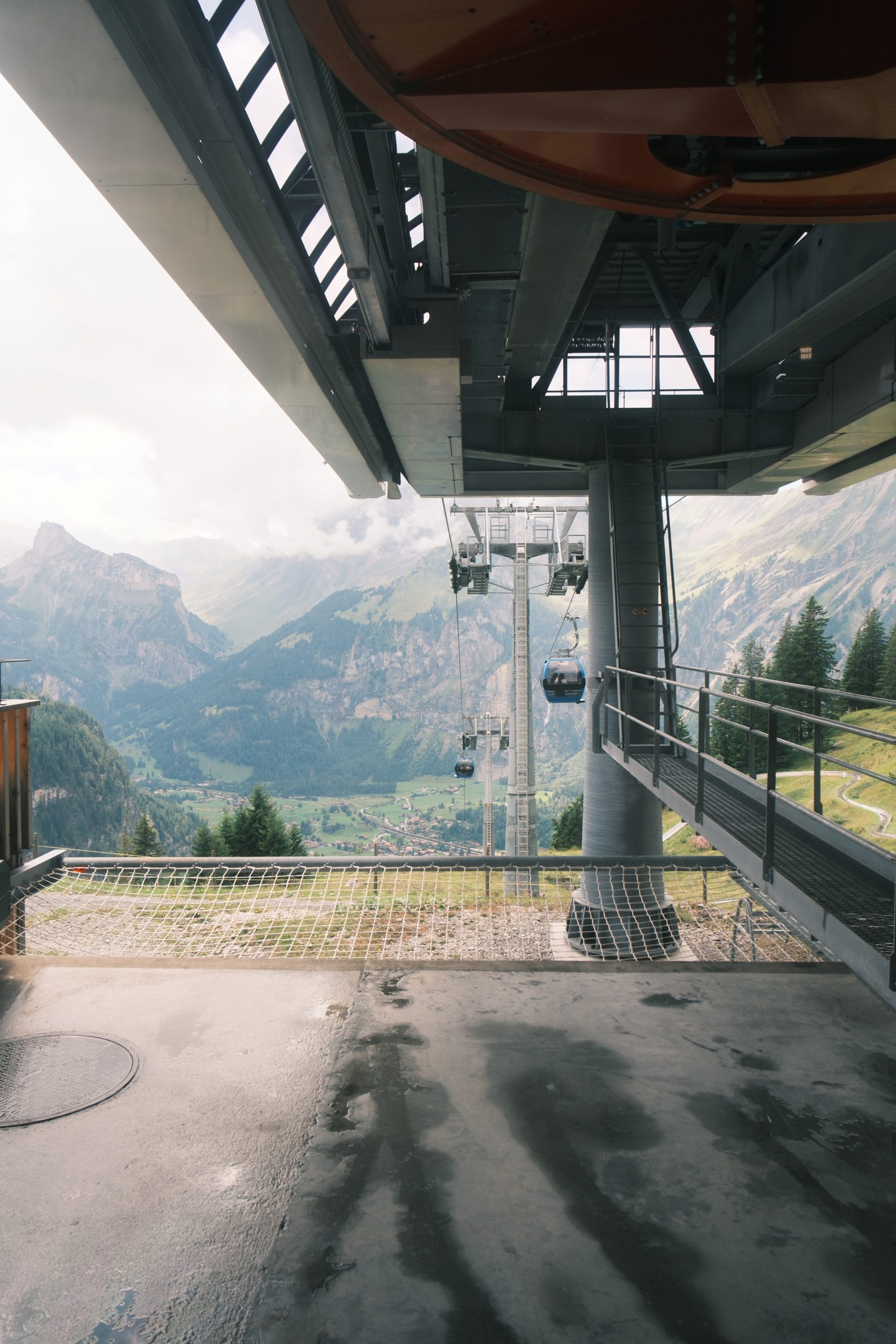
The gondola removes the long climb from Kandersteg into the Oeschinensee area. You can hike up instead, but that turns an already full day into a considerably more demanding excursion.
For most day-trippers from Interlaken, taking the cable car in both directions is the practical choice.
Check the current timetable, operating status and fare before leaving. Mountain transport can be affected by the season, maintenance and weather.
Check your rail pass: The Berner Oberland Pass changed in 2026 and no longer includes the Kandersteg–Oeschinensee cable car. See my Swiss Travel Pass vs Berner Oberland Pass comparison before choosing a pass for your trip.
Do you need to reserve the Oeschinensee cable car?
During the busiest part of the 2026 summer season, yes.
The official Oeschinensee information states that an ascent reservation is required between June 20 and September 20, 2026. You need to reserve a time slot even if your public-transport pass covers or discounts the journey.
Outside that period, requirements may differ. Always check the official reservation information for your travel date rather than relying on an older blog post.
Your reservation applies to the ascent. Arrive with enough time to walk from Kandersteg station and find the correct entrance. I would not choose a slot immediately after your train is due to arrive because even a small delay could make the connection unnecessarily stressful.
What if you miss your time slot?
Do not assume you can simply take the next cable car. Access depends on availability and the conditions of your booking.
You can change your reserved time slot online, but refunds are not available. If your train is delayed or you miss your booked ascent, adjust your reservation online if possible or speak to the staff at the valley station. A place on another departure is never guaranteed.
The safest option is to leave Interlaken early and allow some extra time in Kandersteg.
The walk from the cable car to Oeschinensee
The cable car does not take you directly to the lakeshore.
From the mountain station, the normal path to Oeschinensee takes approximately 30 minutes. The route is broad, clearly marked and suitable for most visitors. You lose some elevation on the way towards the lake, which means the return to the cable car includes an uphill section.
This is easy to underestimate. A simple visit still involves about an hour of walking in total, before counting time spent beside the lake.
The first clear view is worth waiting for. For much of the approach, you are walking through mountain scenery without seeing the full lake. Then the water appears below the cliffs, and the scale of the landscape suddenly becomes much clearer.
If you only want to reach the shore, follow the direct route. If you want to see the lake from above, choose the Oeschinensee Panorama Trail.
Can you visit Oeschinensee without hiking?
Yes, but not entirely without walking.
Taking the cable car and following the direct path to the lake is the easiest version of the visit. You do not need to complete a mountain hike or tackle technical terrain.
However, you still need to:
- Get from Kandersteg station to the valley station
- Walk approximately 30 minutes from the mountain station to the lake
- Walk back uphill to the cable car afterwards
If that final walk is difficult for someone in your group, check the current local transport options between the mountain station and the lakeshore before travelling. Availability can be seasonal and should not be assumed.
For most visitors with ordinary mobility, the direct route makes Oeschinensee accessible without turning the day into a serious hike.
How much time do you need at Oeschinensee?
Allow at least 7–8 hours for a comfortable day trip from Interlaken. If you plan to hike the Panorama Trail, treat it as a full day and leave early.
The train journey to Kandersteg usually takes around 1 hour to 1 hour 15 minutes each way. On top of that, you need time for:
- The transfer at Spiez
- Walking or taking the bus to the valley station
- Waiting for and riding the cable car
- Walking to and from the lake
- Eating, resting and taking photographs
- The return journey to Interlaken
Is half a day enough?
A half-day visit is technically possible if the connections work perfectly and you only walk to the lake, look around briefly and return.
I would not recommend planning it that way.
Too much of the excursion would be spent travelling, and there would be little flexibility for delays or cable-car waiting times. You would also have to watch the clock instead of enjoying the lake.
A full day gives you time to slow down, explore the shore and wait if clouds temporarily hide the surrounding peaks.
How long should you spend at the lake?
For a relaxed direct visit, spend around two to three hours in the lake area. That gives you enough time to:
- Walk down to the shore
- Eat or have a picnic
- Explore different viewpoints
- Take photographs
- Walk back without rushing
If you only want to see the main viewpoint, you can stay for less time. If you are hiking the Panorama Trail, you will naturally need much longer.
Suggested Oeschinensee itinerary from Interlaken
I would keep the day deliberately simple.
| Time of day | Plan |
|---|---|
| Early morning | Leave Interlaken and travel via Spiez to Kandersteg |
| Morning | Walk to the valley station and take your reserved cable car |
| Late morning | Follow the direct path or begin the Panorama Trail |
| Midday | Explore Oeschinensee and stop for lunch |
| Afternoon | Walk back towards the mountain station |
| Late afternoon | Take the cable car down and return to Interlaken |
Exact times depend on the season and your reserved ascent. The important decision is not the specific departure minute, but whether you want a relaxed lake visit or the Panorama Trail.
Do not plan both as if they require the same amount of time.
Direct lake visit or Panorama Trail?
These are two different versions of the day.
Choose the direct path if you:
- Want the easiest way to see Oeschinensee
- Are travelling with young children
- Prefer a relaxed day beside the water
- Have limited time
- Do not want a demanding mountain hike
Choose the Panorama Trail if you:
- Want the best elevated views of the lake
- Have suitable footwear and reasonable fitness
- Enjoy hiking more than relaxing beside the shore
- Can devote the full day to Oeschinensee
- Have checked that the trail is open and conditions are suitable
The direct walk shows you the lake from below, surrounded by the cliffs. The Panorama Trail reveals its full shape and scale from higher viewpoints.
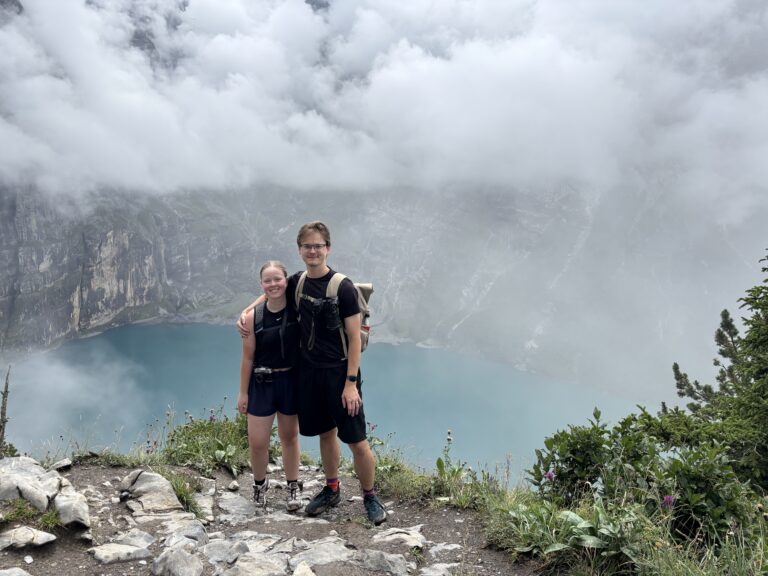
I chose the Panorama Trail because I wanted the photographic views from above. It made the day considerably more demanding, but it was also the part that turned Oeschinensee from a beautiful lake into one of my most memorable places in Switzerland.
You can read my complete Oeschinensee Panorama Trail guide before deciding which version suits you.
Oeschinensee by train or car?
For a day trip from Interlaken, the train is usually the easier option.
Travelling by train
Advantages:
- No parking concerns
- Straightforward connection via Spiez
- You can enjoy the scenery during the journey
- Kandersteg station is within walking distance of the cable car
Disadvantages:
- You must work around the timetable
- Delays can affect a reserved ascent time
- The trip involves a change in Spiez
Travelling by car
Advantages:
- More control over your departure time
- Easier if you are staying outside central Interlaken
- Useful if you want to combine Oeschinensee with another stop
Disadvantages:
- Parking can be busy
- A parking space does not guarantee access to the cable car
- You still cannot drive to the lake
- The cable car and final walk remain part of the journey
A car therefore does not remove the main logistics. It only replaces the train journey to Kandersteg.
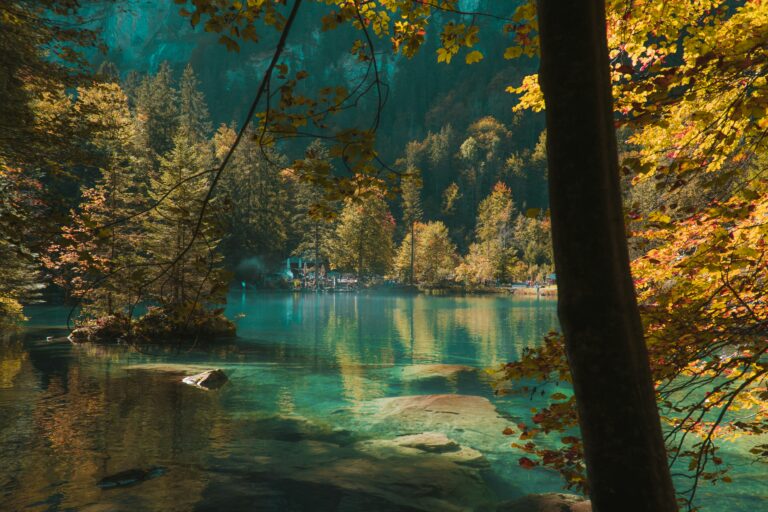
Can you combine Oeschinensee and Blausee?
Yes, but only if you choose the short version of Oeschinensee.
The two lakes are close enough to combine geographically, but the day becomes rushed once you include travel, cable-car reservations and walking time. I would only combine them if you:
- Leave Interlaken early
- Walk directly to Oeschinensee
- Skip the Panorama Trail
- Keep your time at both lakes relatively short
- Check all transport connections beforehand
If hiking is your priority, give Oeschinensee the full day. If you mainly want to see two visually different lakes, combining them can work.
My Oeschinensee versus Blausee comparison explains which lake is the better choice if you only have time for one.
Oeschinensee vs Bachalpsee from Interlaken
The practical difference is simple: Bachalpsee is easier; Oeschinensee is more dramatic.
Bachalpsee fits naturally into a Grindelwald First day trip. The hike is shorter, the logistics are more familiar and the route works particularly well for a first visit to the Jungfrau Region.
Oeschinensee requires more travel but rewards you with a larger lake, much steeper cliffs and the option of a more substantial panoramic hike.
| If you want… | Choose |
|---|---|
| Easier logistics from Interlaken | Bachalpsee |
| A short beginner-friendly hike | Bachalpsee |
| Classic Jungfrau Region scenery | Bachalpsee |
| A larger and more dramatic lake | Oeschinensee |
| A demanding panoramic hike | Oeschinensee |
| A full day beyond the main Interlaken routes | Oeschinensee |
For a first short trip to Interlaken, I would choose Bachalpsee. If you have already explored Grindelwald and Lauterbrunnen—or simply prefer the more impressive lake—I would choose Oeschinensee.
How much does the day trip cost?
Your total cost depends on:
- Your return train ticket between Interlaken and Kandersteg
- The Oeschinensee cable-car ticket
- Any discount card or travel pass
- Food, drinks and optional activities
Check your train fare in the SBB app and use the official Oeschinensee website for current cable-car prices. Swiss transport prices and pass coverage can change, so exact figures in older articles quickly become unreliable.
If you have a Swiss Travel Pass, Swiss Half Fare Card or regional pass, check the cable-car discount carefully. Even when transport is included or discounted, you may still need to reserve an ascent time during the high season.
Best time to visit Oeschinensee
Summer provides the easiest access and the widest range of activities, but it is also the busiest period.
June
June can bring green scenery and smaller crowds, but higher hiking trails may still have snow. Check the live trail status before attempting the Panorama Trail.
July and August
These are the most reliable months for summer hiking, but also the busiest. Reserve your ascent early and take a morning time slot if possible.
September
September can offer a good balance of quieter paths and suitable hiking conditions. Days become shorter and the weather can change more quickly.
October and the shoulder season
Cable-car schedules, restaurants and hiking conditions become less predictable. Early snow is possible, so verify what is operating before making the journey from Interlaken.
What time of day is best?
Morning is the safest choice.
Starting early gives you more time, cooler walking conditions and some flexibility if the weather changes. It also makes the return journey far less stressful because you are not relying on one of the final cable cars.
Mountain clouds can build during the day, although clear weather is never guaranteed. Check the webcam before leaving Interlaken, but remember that conditions can change quickly.
What to bring
Even if you only take the direct path, you are visiting a high mountain environment.
Bring:
- Water
- Food or snacks
- Sunscreen and sunglasses
- A light jacket or warm layer
- Shoes with sufficient grip
- A charged phone
- Your cable-car ticket and reservation
- A camera, if you enjoy photography
Wear proper hiking shoes for the Panorama Trail. The direct path is easier, but ordinary footwear can still become uncomfortable when the ground is wet.
Common mistakes to avoid
Treating Oeschinensee as a quick stop
The lake is not beside Kandersteg station or the cable-car exit. Every stage adds time, so plan a full excursion.
Forgetting to reserve the ascent
For the 2026 high season, an ascent time slot is required between June 20 and September 20. A train pass or discounted ticket does not automatically replace this reservation.
Booking a time slot too close to your train arrival
Allow time to leave Kandersteg station and reach the valley station. A little buffer makes the day much more relaxed.
Assuming the cable car stops at the lake
You still have approximately 30 minutes of walking after reaching the mountain station, followed by an uphill return.
Underestimating the Panorama Trail
The elevated route is a proper mountain hike. Check its status, carry enough water and do not choose it solely because the photographs look good.
Adding too much to the itinerary
Combining Oeschinensee with Blausee is possible, but combining both lakes, a long hike and a relaxed lunch rarely is. Decide what matters most.
Ignoring the last cable car
Check the final descent before beginning a hike. Walking all the way back to Kandersteg is possible, but it is unlikely to be how you want to finish the day.
Is Oeschinensee worth the trip from Interlaken?
Yes.
Oeschinensee requires more effort than Lauterbrunnen, Grindelwald or Bachalpsee. But it also gives you something those places do not: a vast blue lake enclosed by cliffs, reached through a journey that gradually pulls you away from the busiest part of the Bernese Oberland.
For a short first visit to Interlaken, it may not be my first recommendation. For a longer stay—or for anyone who wants a full mountain day beyond the standard Jungfrau routes—it absolutely is.
Take the direct path if you want to relax beside the water. Choose the Panorama Trail if you want the strongest views and do not mind working for them.
Either way, leave early, reserve the cable car when required and give Oeschinensee the time it deserves.
Discover more lakes: Looking for more beautiful lakes in the Jungfrau Region? My Best Lakes Near Interlaken compares the best options, including Oeschinensee, Lake Brienz, Lake Thun and Bachalpsee.
Frequently asked questions